
BE SURE YOU ARE MAKING THE RIGHT DECISION WHEN CHOOSING CONCRETE SEO!
Step 1 – Build out website and obtain placeholders on search engines.
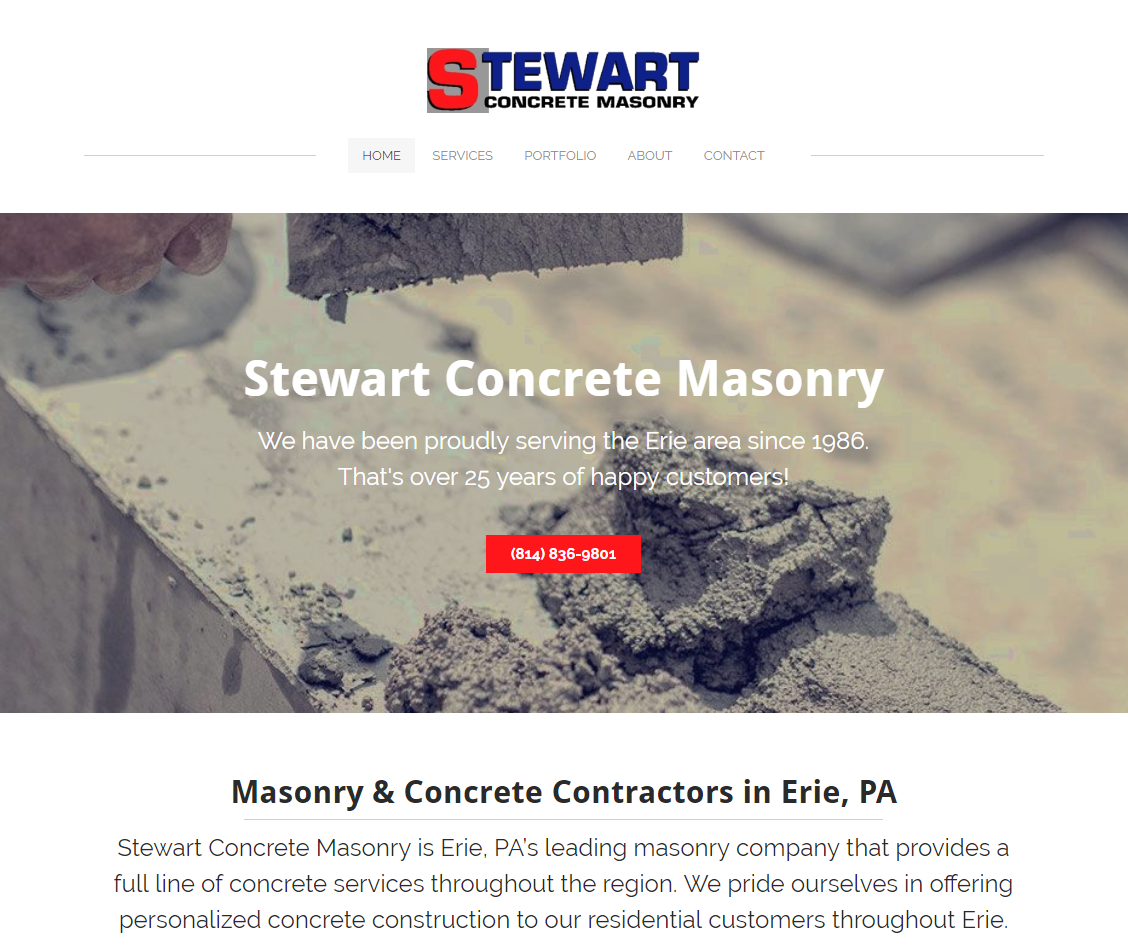
A typical Concrete website has only 5-6 pages (Home – About Us – Our Services – Coupons – Contact Us). That does not create a lot of indexation or placeholders on the major search engines. Most contractors provide a wide variety of other services including Driveways, Chimney Repointing, Foundation Repair, and Stamped or Decorative Concrete, just to name a few. By building out the website and creating separate pages for each of these services (combined with city modifiers), the Concrete or Masonry contractor can get listed on the search engines for each of those different keyword combinations. Here is an example: Home – About – Coupons – Contact Us Sub-pages for each service – Dallas Concrete Flooring, Dallas Driveway Contractors, Dallas Concrete Repair, Dallas Foundation Repair, Dallas Fireplace Installation, etc. They often provide services in a large number of towns outside their primary city. In order to be found on the major search engines for EACH of those sub-cities, additional pages need to be created:

Step 2 – Optimize pages for major search engines like Google:
Once the pages are built for each of your core services, each of the pages need to be optimized from an SEO perspective so that the search engines understand what the page is about and list you for those words. Here are some of the most important items that need to be taken care of for on-page search engine optimization:
- Unique title tag on each page
- H1 tag restating that title tag on each page
- Images named with primary keywords
- URL should contain page keyword
- Anchor text on each page and built into the footer
- XML Sitemap should be created and submitted to Google Webmaster Tools and Bing Webmaster Tools
Step 3 – Inbound Links
Once the pages are built out and the “on-page” SEO is complete, the next step is getting inbound links. Everything we have done up to this point is similar to laying the ground work, you have to have the pages in order to even be in the running. However, it is the number of QUALITY inbound links to those pages that is going to determine placement.

30% of SEO is On-Page type work. The other 70% is Link Building
Once the pages are built out, you are just getting started. The only way to get your site to rank above your competition is by having MORE quality inbound links to your site.
He Who Has The MOST Quality Inbound Links Wins!
There are a number of things that you can do to increase the number of inbound links to your site.
- Association Links– Be sure that you have a link to your website from any industry associations that you belong to (builders association, Chamber of Commerce, networking groups, etc.).
- Directory Listings– Get your site listed on as many directories as possible (Angie’s List, Yahoo Local Directory, Judy’s Book, Yelp.com, etc.).
- Create interesting content/articles about your industry– This is probably the #1 source of inbound links because you can write an article about something like “Concrete Patios,” and push it out to thousands of article directory sites, each containing a link back to a specific page on your site.